How to Identify a Failing Sterndrive Engine Coupler: Symptoms & Replacement Guide
"Diagnose early signs of marine drive coupler failure to prevent expensive stern drive misalignment and spline damage."
In a sterndrive propulsion system (such as MerCruiser Alpha One, Bravo, or Volvo Penta Cobra), the marine engine coupler is the critical bridge that connects the engine's crankshaft to the sterndrive's input shaft. Its primary function is to transmit torque while absorbing torsional vibrations and tolerating minor operational alignment variances.
Because couplers contain a vulcanized rubber elastomer element designed to yield under high torsional stress, they are wear-and-tear components. Identifying early signs of coupler failure can save commercial operators and boat owners thousands of dollars in catastrophic drivetrain damage.
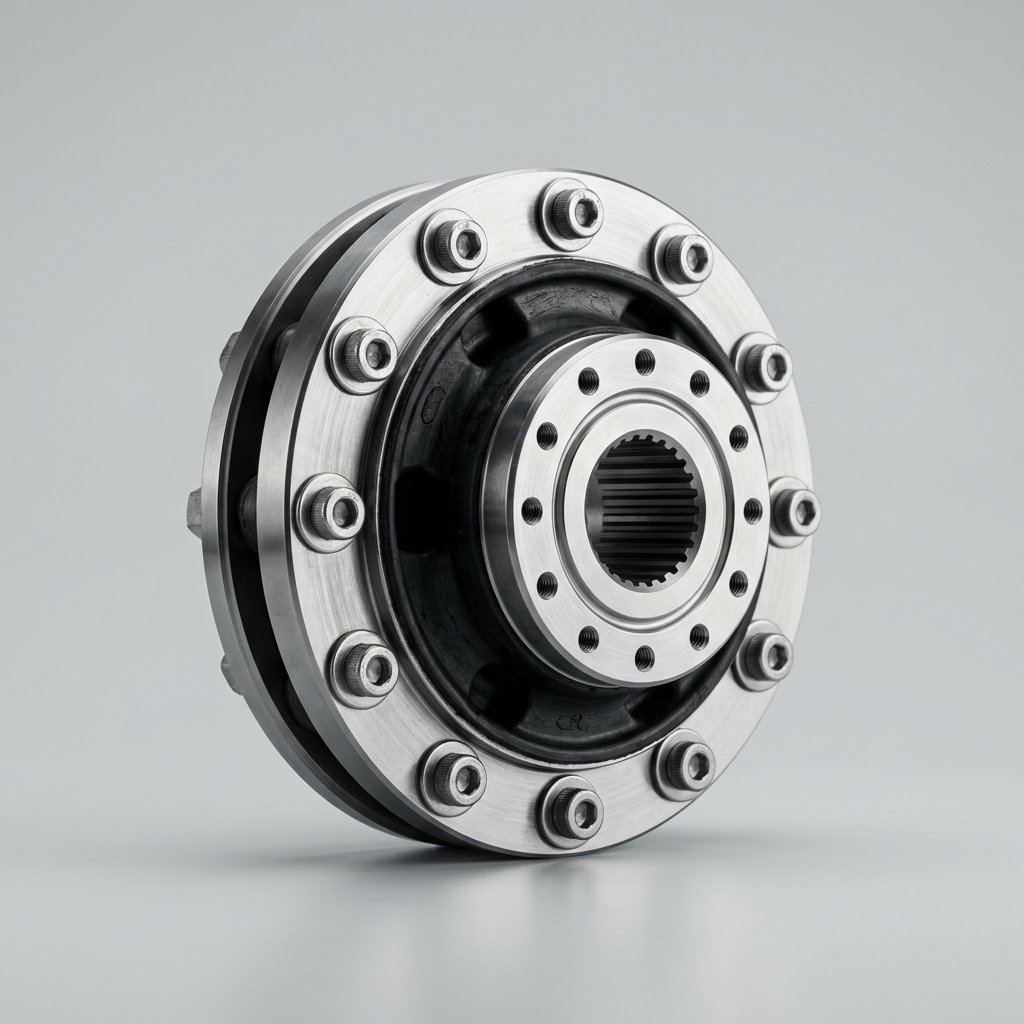
JOMIDA Heavy-Duty Marine Engine Coupler Assembly
Common Symptoms of a Failing Marine Coupler
- The Smell of Burning Rubber: One of the earliest warning signs. As severe misalignment forces the elastomer core to undergo excessive shear stress and thermal degradation under load, it heats up, releasing a distinct burning rubber odor through the engine compartment or bilge.
- Rattling or Intermittent Clunking Noises: Unlike high-pitched whines (which typically point to gimbal bearing or gearcase wear), a worn coupler spline develops excessive backlash against the input shaft. This produces a distinct metallic rattle or clunking sound, particularly at idle or during initial gear engagement.
- Excessive Drivetrain Vibration: Deteriorated rubber isolation or an off-center elastomer core fails to damp engine harmonics properly. If you notice low-frequency vibrations that increase proportionally with engine RPM, the coupler's rubber element may be tearing or delaminating.
- Sheared Vulcanized Core or Stripped Splines: The final stage of failure. The rubber vulcanization shears completely under load, or the internal splines strip entirely. The engine will rev freely, but no torque is transmitted to the input shaft, resulting in a total loss of propulsion (often misdiagnosed as a spun propeller hub).
What Causes Marine Coupler Failure?
- Engine Mount Settling and Misalignment: The primary cause of coupler failure. Over time, wooden stringers can rot, lag bolts can loosen, or rubber mounts can settle, shifting the engine out of concentric alignment with the sterndrive input shaft. Even a minor alignment deviation can rapidly accelerate spline and elastomer wear under constant loading.
- Fretting Corrosion and Lack of Spline Lubrication: Drive splines require regular lubrication with high-temperature, water-resistant grease. Without it, moisture intrusion and high-load micro-friction lead to severe fretting corrosion and abrasive wear, eventually stripping the spline teeth.
- Improper Installation and Torque: Re-installing the engine without a concentric alignment check or over-torquing the coupler bolts can stress the cast housing, causing micro-fractures or structural failure under heavy torque loads.
- Sudden Shock Loading (Prop Strike): Hitting submerged debris or grounding the propeller forces an instantaneous torque shock backward through the drivetrain, shearing the vulcanized elastomer core to protect other critical drivetrain components.
Technical Replacement Best Practices
When replacing an engine coupler, never skip the alignment bar test. Before sliding the sterndrive back onto the gimbal housing, insert a dedicated engine alignment tool through the gimbal bearing and into the coupler splines. The tool must slide in and out smoothly with index finger pressure. If it binds, adjust the front and rear engine mounts until alignment is perfect.
B2B Distributor Tip
Aftermarket repair catalogs should always bundle coupler replacements with replacement gaskets, gimbal bearings, and high-temperature marine spline grease. Stocking JOMIDA high-durability couplers ensures repeat customers among repair centers.
Need replacement couplers in bulk?
Contact JOMIDA sales team to receive catalog pricing & samples terms.